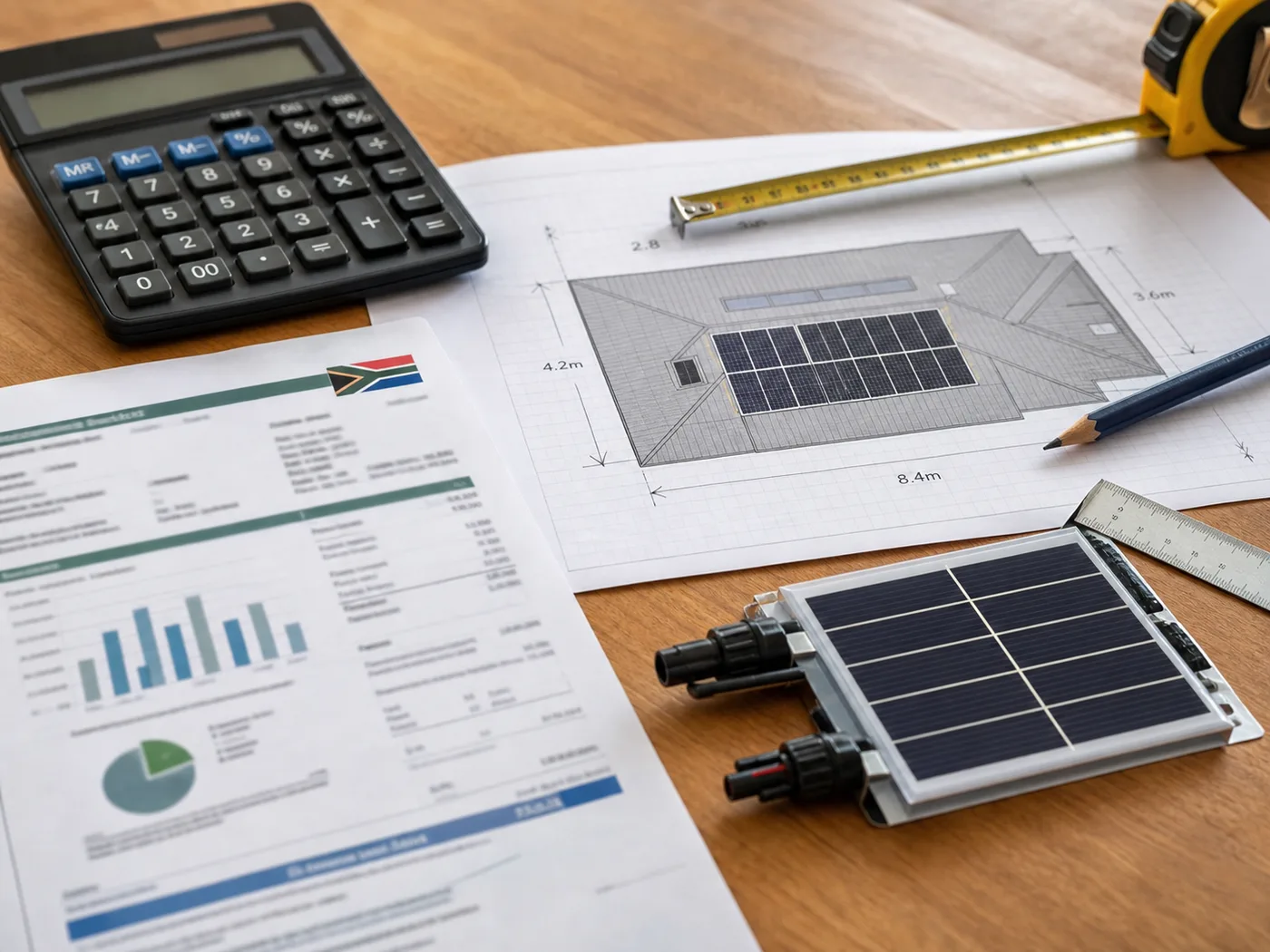
Use the calculator for an indicative starting point, then confirm the system against your roof, phase type, appliance loads and preferred backup level.
When people picture going solar, they usually think about inverters, batteries and monthly savings. The roof is an afterthought, right up until an installer says the array might not fit, or that half of it will sit in shade. Roof space is a real constraint, and it is worth understanding early, because it quietly shapes how much power you can generate and therefore what your whole system can do.
The good news is that solar panels have become more compact and more powerful, so most South African homes have far more usable roof than they fear. A modern panel is roughly the size of a single mattress and produces more than its equivalent did a few years ago, which means the number you need for a typical home fits comfortably on an average roof. This guide gives you honest square-metre estimates, explains what makes roof space usable or not, and helps you gauge whether your roof is up to the job.
Key takeaways
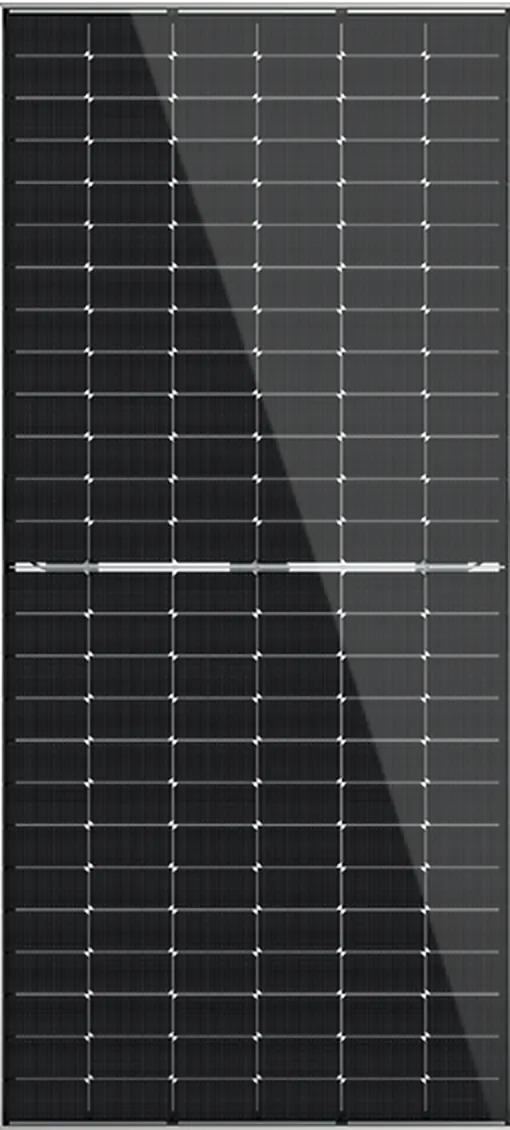
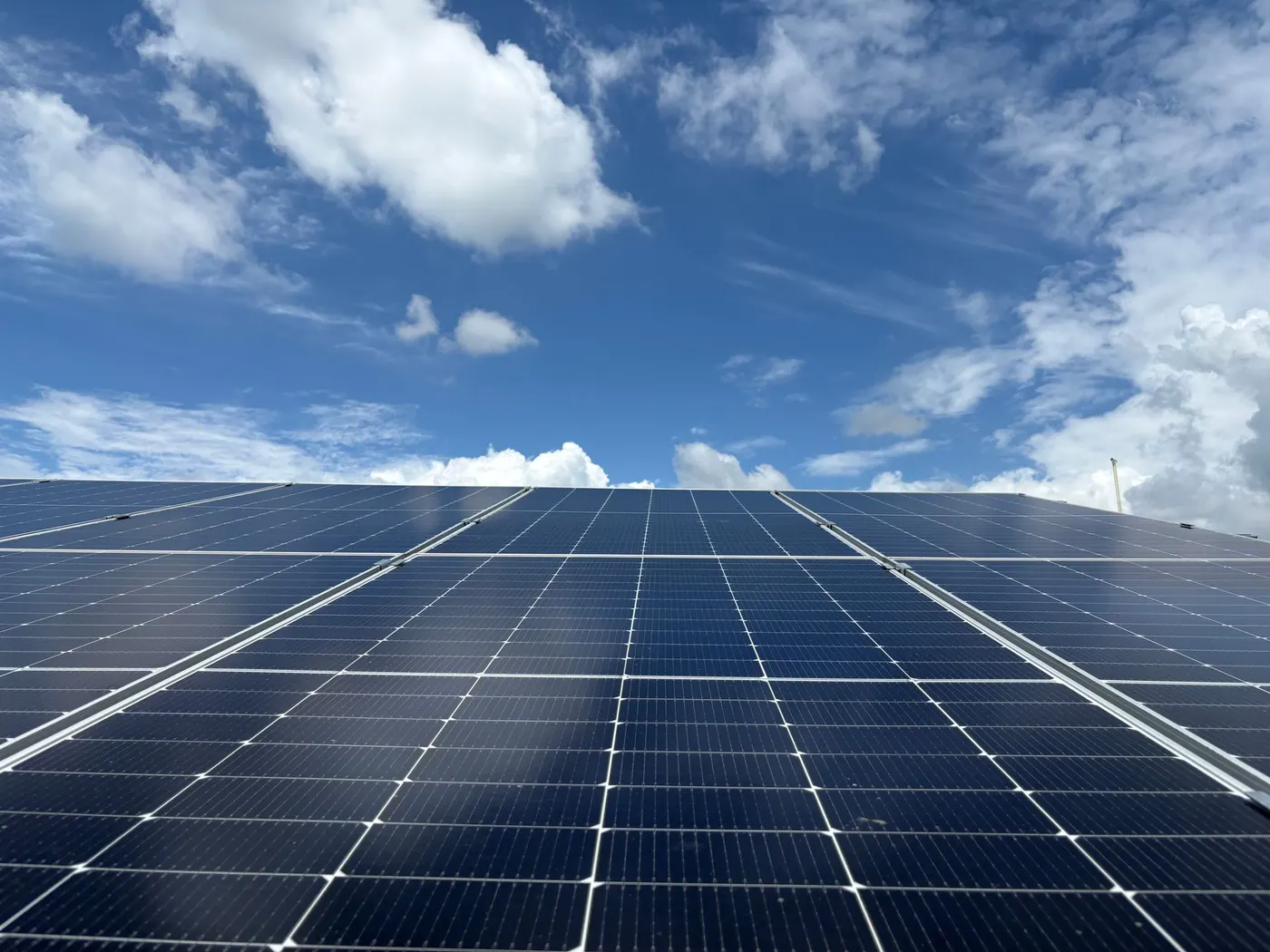
The 580–630W panels most South African installers now use measure about 2.28–2.38m by 1.13m, roughly 2.6–2.7m² each. Compact 435–460W panels are about 2m².
With clearance and gaps, plan on about 3m² of good roof per large panel: roughly 12–18m² for four to six panels and 24–36m² for eight to twelve.
Our roof fit calculator lays out real panel sizes on each roof face and estimates the output for your city and roof direction.
Not all roof is usable: orientation, shading, obstructions and roof type all reduce the count.
North-facing, unshaded roof is worth far more than a larger area facing the wrong way.
The rough arithmetic
Let us start with the number everyone wants. Panels have grown as their wattage has risen. The 580–605W panels widely sold in South Africa measure about 2.28m by 1.13m (2.58m² each, per JA Solar's datasheet), and 605–630W panels about 2.38m by 1.13m (2.70m², per Jinko's datasheet). Compact 435–460W panels are about 1.76m by 1.13m (2.0m², per JA Solar). Once you allow clearance from the roof edges and small gaps between panels, planning around 3 square metres per large panel is a sensible rule of thumb.
From there the maths is easy. A modest essentials system of four to six panels needs roughly 12–18m² of good roof. A typical family home running eight to twelve panels needs around 24–36m². A large home with a big array might want 40m² or more. Area is only a first guide, because panels come in fixed rectangles: the roof fit calculator tries portrait and landscape layouts on your actual roof faces. To put that in perspective, a single average double garage roof is often enough for a substantial system, and most suburban homes have several times the area they will ever need.
~3m²
per large panel with spacing
12–18m²
4–6 panel essentials
24–36m²
typical family home
So for the majority of households, raw area is not the problem. The problem, when there is one, is that not all of your roof counts.
Why usable roof is less than total roof
Your roof's total footprint and its usable solar footprint are two different numbers, and the gap between them is where roof-space planning actually lives.
Orientation
The direction a roof face points matters a lot in South Africa. Because we are in the southern hemisphere, north-facing roof is the prime real estate. It catches the most sun across the day and generates the most energy per panel. East and west faces are usable and often valuable for spreading generation across morning and afternoon. South-facing roof, by contrast, sees far less direct sun and is the least productive place to put panels. A big south-facing roof can be nearly worthless for solar while a modest north face does the real work.
Shading
A panel in shade for part of the day produces far less, and shade on even one panel can drag down others wired with it. Trees, a neighbour's double-storey, a chimney, a parapet wall, or a satellite dish can all cast shadows that move across the roof through the day and seasons. Usable roof is unshaded roof during the productive hours, which sometimes rules out areas that look perfectly fine at a glance.
Obstructions and roof shape
Real roofs are rarely clean rectangles. Chimneys, vent pipes, skylights, solar geysers, ridges, valleys and dormer windows all break up the available area. A complex hipped roof with several small faces yields fewer big unbroken runs than a simple pitched roof. Installers need contiguous space to lay panels efficiently, so a fragmented roof of the same total area holds fewer panels than a clean one.
Not sure which system you need?
Get a free, no-obligation quote sized to your home, usage and budget. It only takes a minute.
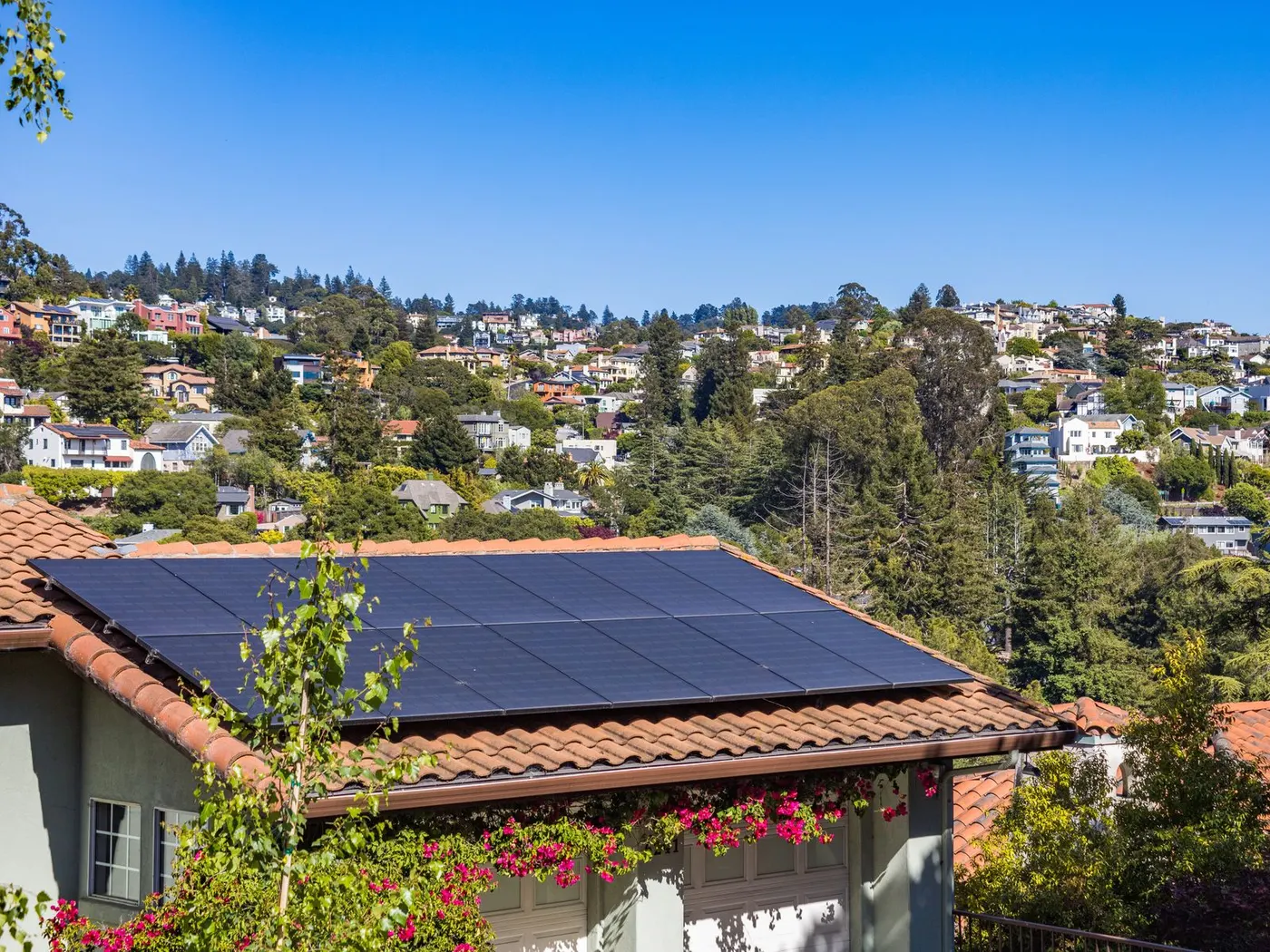
Beyond area and orientation, what your roof is made of affects the install. Most South African roofs (concrete tile, clay tile, and metal sheeting like IBR or corrugated) are all perfectly suitable for solar, each with its own mounting approach. Metal sheet roofs are often quick and tidy to mount on; tile roofs need the right hooks and careful work to keep them watertight; flat concrete roofs use tilted frames to angle the panels correctly.
Just as important is structural soundness. Panels and mounting add weight and must be anchored properly, so the roof structure needs to be in good condition. An old or sagging roof, or worn waterproofing, may need attention before or during installation. This is one more reason a physical assessment beats any estimate from satellite imagery. An assessor checks the trusses and the covering, not just the outline. Get a free Alumo quote →
Quality over quantity
The single most useful mindset shift is this: the best roof is the best-oriented and least-shaded one, not the biggest. A homeowner obsessing over total square metres often misses that a smaller patch of clear, north-facing roof will out-produce a sprawling but shaded or south-facing expanse.
It also means that if roof space is tight, higher-efficiency panels help — they squeeze more watts out of each square metre, so you reach your target generation with fewer panels. And where a single roof face cannot hold everything, a good design spreads the array across multiple faces (north plus east and west, for instance), which has the bonus of stretching generation across more of the day. Roof-space planning, done properly, is really about finding the right space, not just enough of it.
What the packages imply for your roof
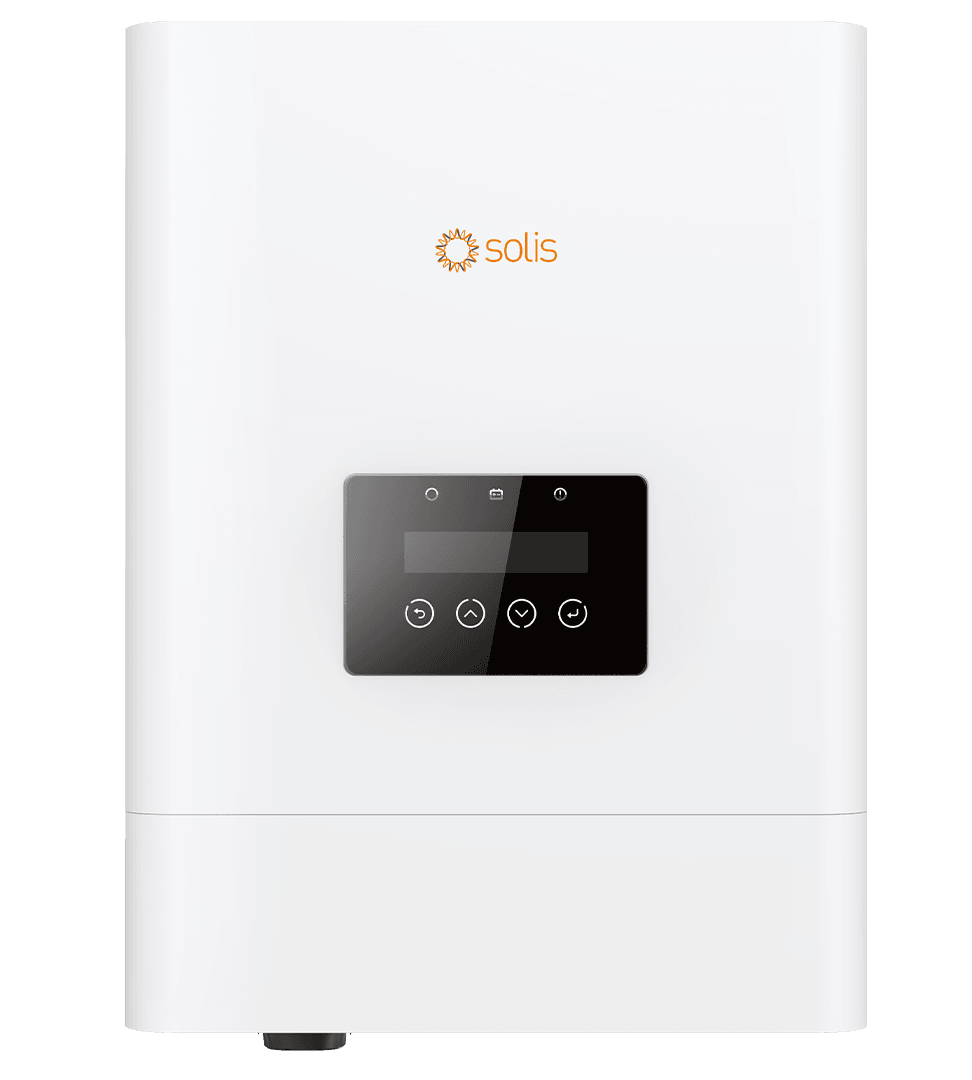
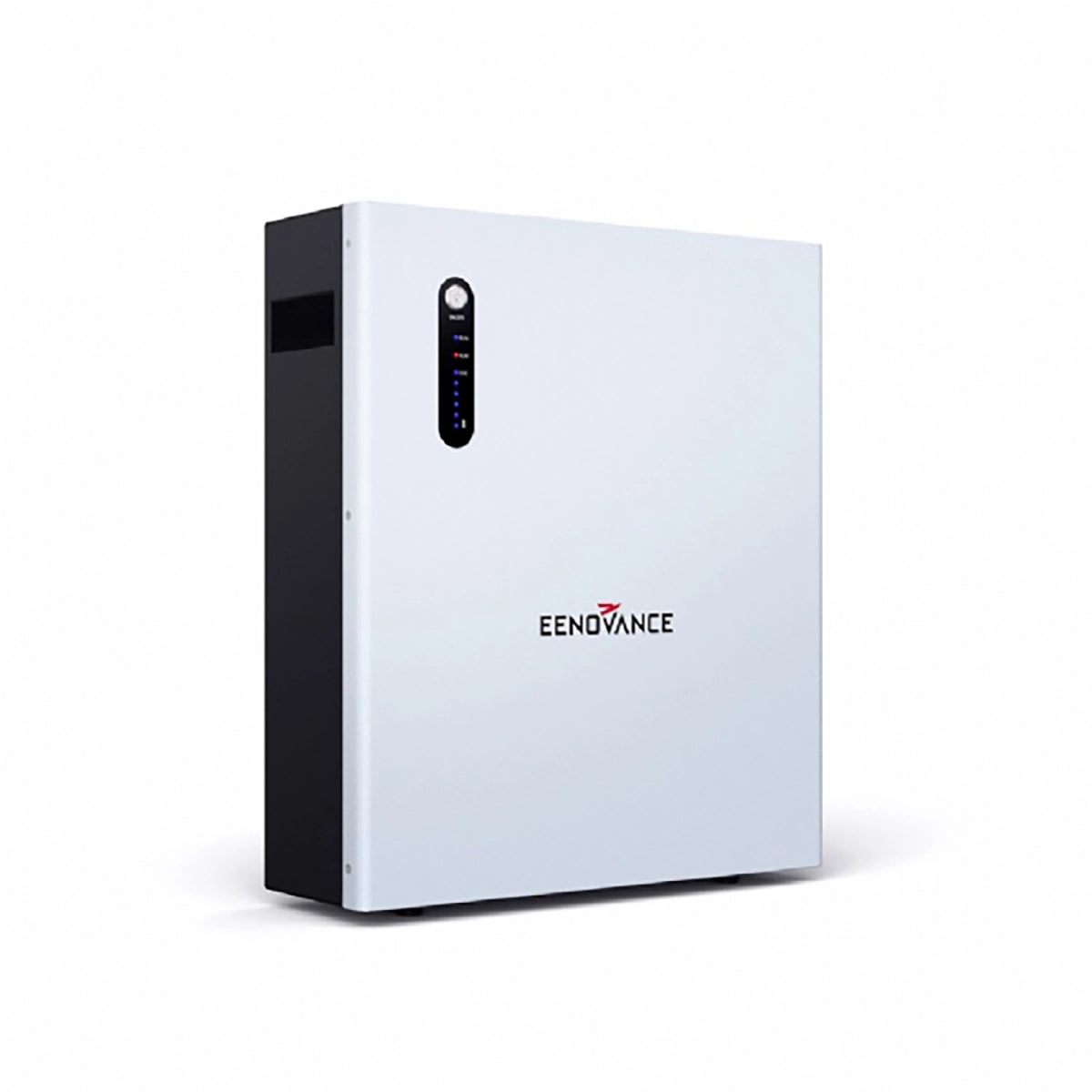
Alumo's current solar-plus-battery rent-to-own range uses a Solis 5kW inverter and Eenovance 5.32kWh battery: Watt-a-Deal has three 615W panels from R1,418/month, The Big Watt has four from R1,487/month, and The Power Bae has six from R1,626/month on a seven-year term. Three- and five-year prices, solar-only configurations and battery-only pricing are available on our current package comparison.
Larger custom systems with ten, twelve or more panels naturally want more clear roof, but as the arithmetic above shows, even those rarely trouble an average home's total area. The real determinant is not how many panels fit in theory, but how many fit on the good, unshaded, well-oriented portion of your roof, which is exactly what a site assessment measures.
Free tool
Estimate your system & savings
Move the slider to your monthly bill for an instant, indicative suggestion.
This is an indicative starting point. The site assessment and signed quote confirm the system, current price, equipment, savings and backup time. Rent-to-own payments increase by 6.5% each year.
Frequently asked questions
How much roof space does one solar panel need?
A common 580–630W panel occupies about 2.6–2.7 square metres, and a compact 435–460W panel about 2 square metres. Allowing for spacing and clearance from roof edges, plan around 3 square metres per large panel. So a six-panel system needs roughly 18m² of usable roof, and a twelve-panel system around 36m².
How many solar panels can fit on my roof?
It depends on your usable roof (the unshaded, well-oriented, unobstructed portion), not the total area. Most South African homes have far more roof than they need, but orientation, shading, chimneys and roof shape reduce the count. An assessor measures the genuinely usable area to tell you how many panels fit.
Can I fit solar on a small roof or townhouse?
Often yes. A small essentials system of four large panels needs about 12m² of good roof, which many townhouses and compact homes can provide. Higher-efficiency panels help you reach your target with fewer panels where space is tight. A site assessment confirms what your specific roof can carry.
Does the direction my roof faces affect how much I need?
Yes, significantly. North-facing roof generates the most in South Africa, so panels there do more work per square metre. If your best space faces east, west or south, you may need more panels, or an array spread across several faces, to reach the same generation. Orientation matters as much as area.
Who works out if my roof is suitable?
SolarGuide is an independent referral partner. Alumo carries out the site assessment (checking your roof's orientation, shading, structure and usable area), then supplies, installs, finances and warrants the system. All pricing here is indicative and subject to that assessment and credit approval. We simply help you compare and get a free quote. Get a free Alumo quote →
SolarGuide is an independent referral partner. We help you compare options and arrange a free quote — Alumo supplies, installs, finances and warrants the systems. Pricing is indicative, sourced from Alumo’s published catalogue, and subject to a site assessment and credit approval.