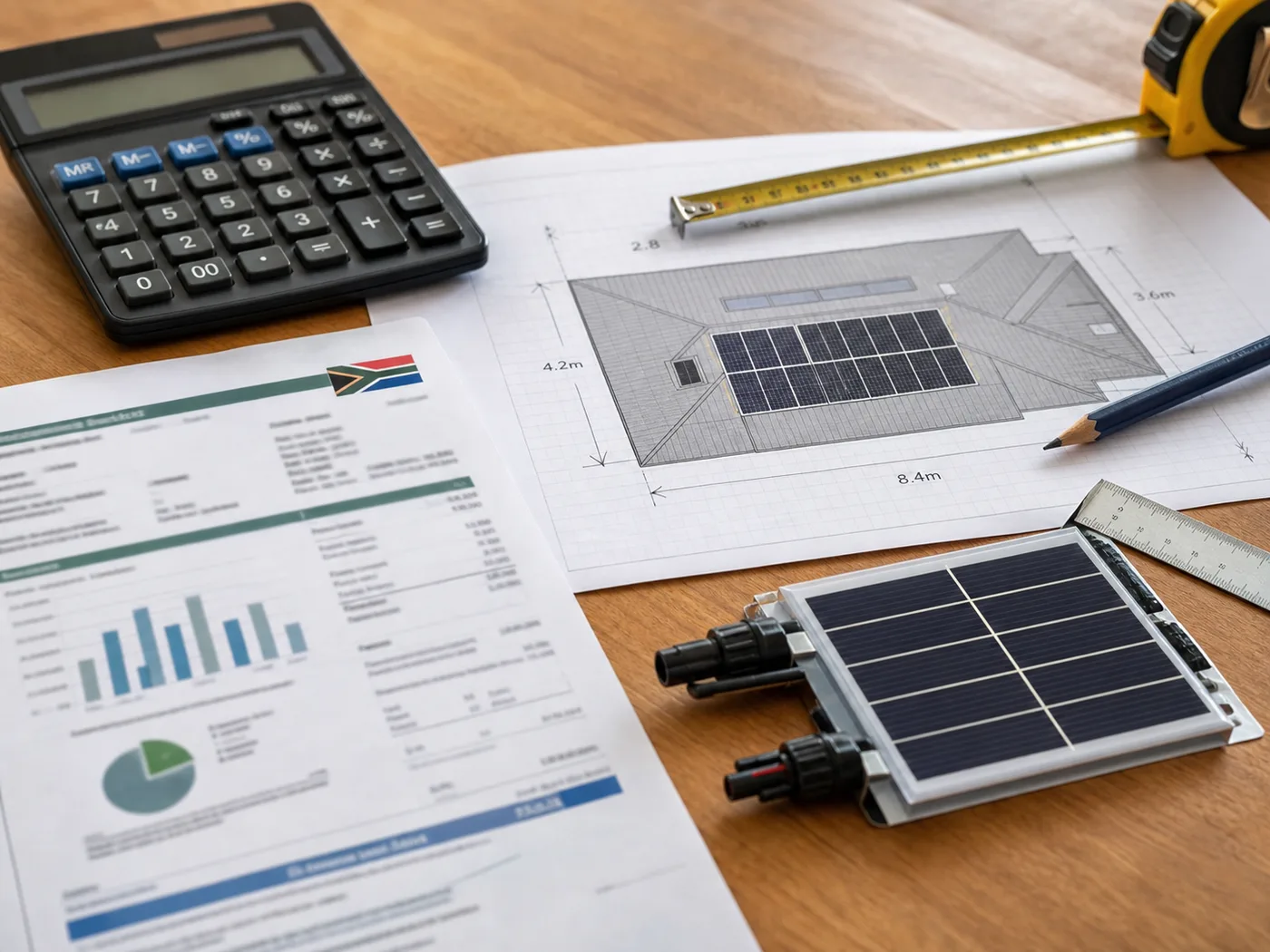
The same system can look very different as an outright purchase, rent-to-own plan or subscription. Compare the published package structures before you request a tailored quote.
If your electricity bill hovers around R2,000 a month, you're in the sweet spot where solar starts to make obvious financial sense in South Africa. You're spending enough that the savings are real, but not so much that you need an industrial-scale system. The tricky part is translating that R2,000 into an actual system size and price.
This guide does that translation honestly. Rather than throwing a random package at you, it walks through how your bill maps to the size of system you need, what that costs, and how the monthly repayment stacks up against the Eskom bill you're already paying. No invented statistics, just a clear way to reason about your own numbers.
Key takeaways
A R2,000 bill usually points to a small-to-mid hybrid system in the 3.6kW to 5kW inverter class.
Your bill tells you roughly how much energy you use, which drives panel and battery sizing.
Financed, a system for a R2,000 bill often costs a similar amount per month, but with load-shedding backup and a known yearly increase.
Battery size is a choice about backup hours, and it's the biggest lever on your total cost.
Usage patterns matter as much as the rand figure — daytime users get more from the same system.
What a R2,000 bill tells us
Your monthly bill is a proxy for how much electricity you consume, and consumption is what drives system sizing. At current Eskom-linked tariffs, a R2,000 bill points to a moderate household — think a family home running the usual mix of fridges, lights, TVs, a geyser, and the occasional heavy appliance, without a pool pump or borehole hammering the meter all day.
That level of usage typically lands you in the small-to-mid hybrid range: an inverter somewhere between 3.6kW and 5kW, a battery sized for a few hours of backup, and a set of panels to generate through the day. It's exactly the band Alumo's most popular packages are built for.
Why your bill isn't the whole story
Two homes with identical R2,000 bills can need different systems, because when you use power matters as much as how much. A household that's empty during the day and only lights up at night leans heavily on the battery. One with someone working from home uses solar directly as it's generated, which is the most efficient way to run. A proper assessment looks at your pattern, not just the rand figure. The bill is a solid starting point, though.
The system size for a R2,000 bill
For most R2,000-a-month homes, a 3.6kW to 5kW hybrid system hits the mark. The lower end covers your essentials and a chunk of daytime load; the upper end gives you more headroom to run heavier appliances and offset more of your grid usage.
The efficient entry point: 3.6kW class
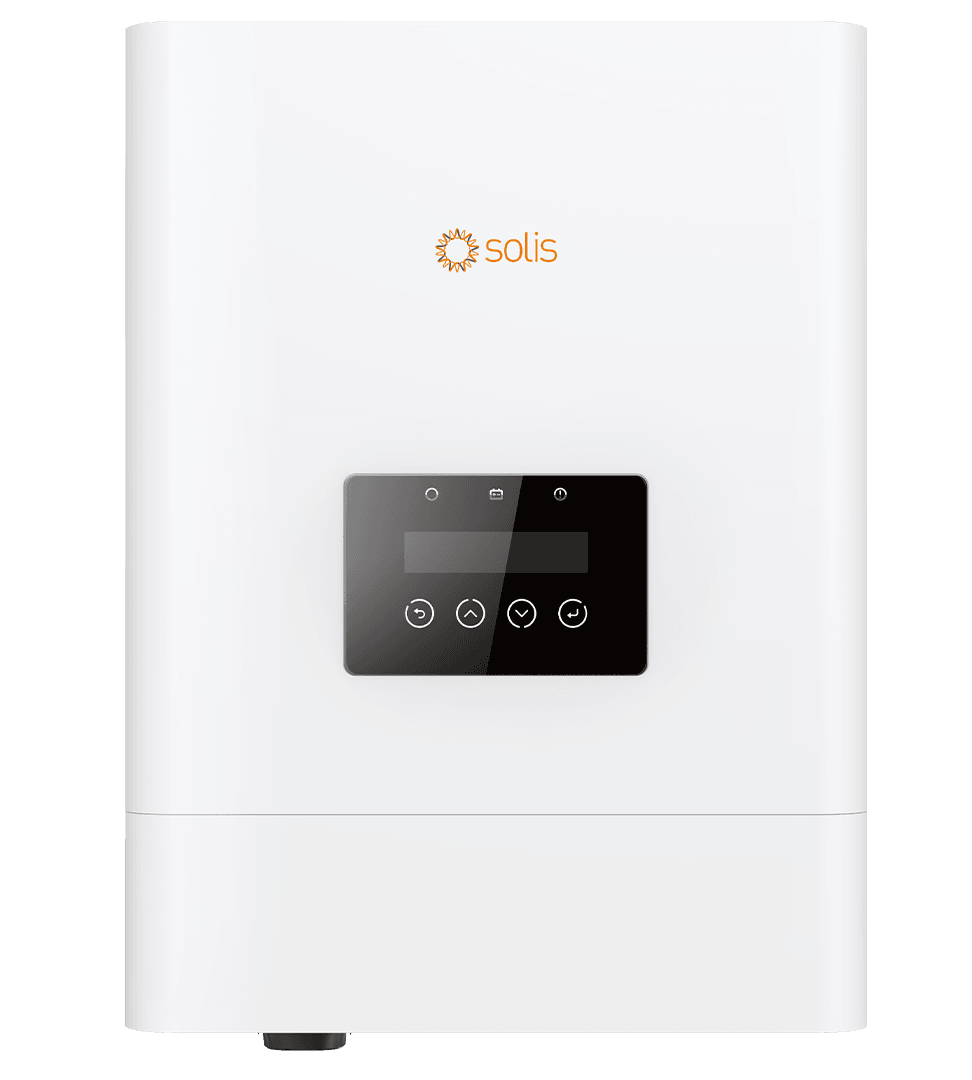
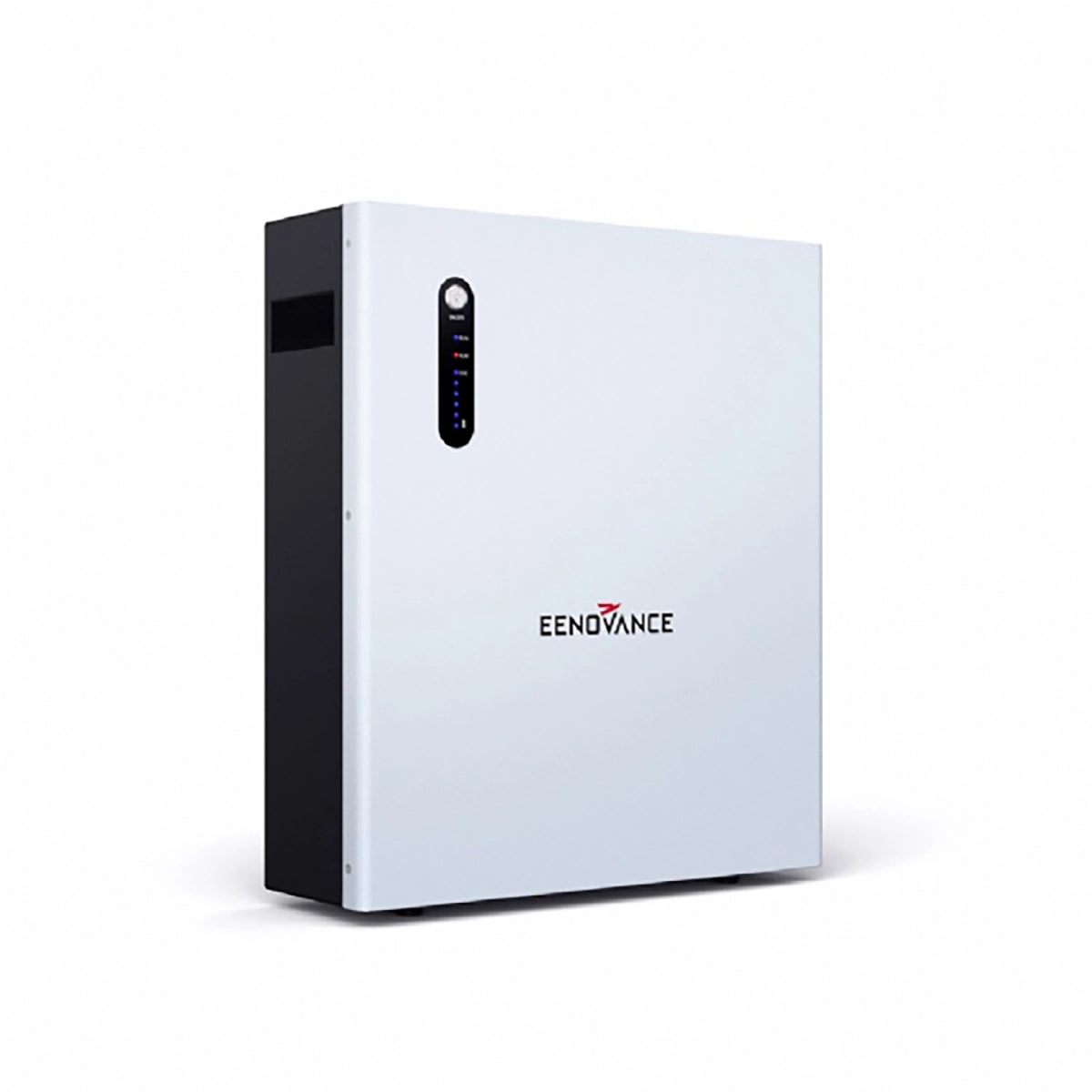
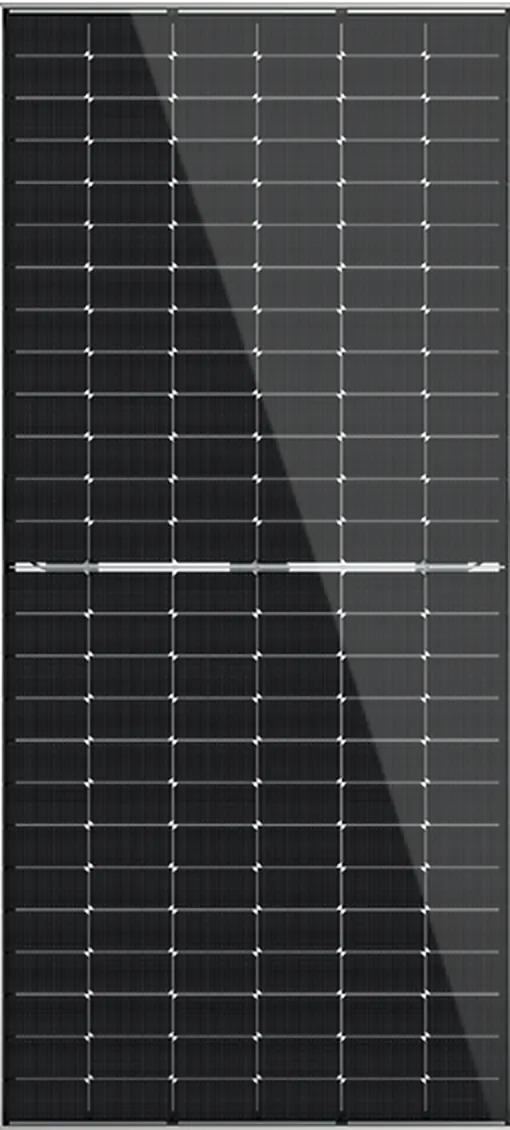
Alumo's current solar-plus-battery rent-to-own range uses a Solis 5kW inverter and Eenovance 5.32kWh battery: Watt-a-Deal has three 615W panels from R1,418/month, The Big Watt has four from R1,487/month, and The Power Bae has six from R1,626/month on a seven-year term. Three- and five-year prices, solar-only configurations and battery-only pricing are available on our current package comparison.
If your R2,000 bill comes with the ambition to run more at once, or you expect your usage to grow, stepping up to a 5kW inverter with a larger battery buys you headroom. It costs more, but it offsets more of your bill and rides out longer outages. Whether that's worth it depends on your appetite for backup and how much daytime power you use. Get a free quote → to size it against your actual usage.
Not sure which system you need?
Get a free, no-obligation quote sized to your home, usage and budget. It only takes a minute.
Here's the reframe that changes everything. If you pay cash, a system sized for a R2,000 bill lands in the low tens of thousands of rands, and pays itself back over a handful of years while Eskom's tariffs keep climbing.
But most people in this band finance, and that's where it gets interesting. A rent-to-own system for this size of home often carries a monthly repayment in a similar ballpark to the R2,000 you're already paying Eskom. The Big Watt starts from R1,487 a month and Watt-a-Deal from R1,418 on a seven-year term. Line that up against a R2,000 bill and the logic becomes obvious.
This is the point that trips people up. You're not being asked to find new money. You're being asked to redirect money you already spend every month. The difference is what you get for it. Right now, R2,000 to Eskom buys you power that gets cut during load-shedding and costs more every year. The same money towards a solar repayment buys you backup power, a monthly cost with a known yearly increase and a route to owning the system.
The tariff angle
Your Eskom bill won't stay at R2,000. It rises with every tariff increase. Alumo's rent-to-own payment also rises, by a set 6.5% a year. So even if the numbers look level today, they diverge in your favour in any year the tariff increase is bigger than 6.5%, and you know your payment for every year of the term in advance.
The battery decision
Within your R2,000-bill system, the battery is the biggest lever on price. A small battery (around 3.6 to 3.8kWh) covers your essentials, lights, Wi-Fi, fridge, TV and device charging, for a few hours, which is enough for most load-shedding stages. Want to run more, or ride out longer outages? A bigger battery does that, but it lifts the monthly cost.
For a R2,000 household, the 5.32kWh battery in Watt-a-Deal or The Big Watt is usually a sensible match. There's no prize for over-buying storage you won't use. If load-shedding in your area is mild, that battery may be all you need; if you're getting hammered with long Stage 6 blocks, extra capacity earns its keep.
Want a system sized to your actual R2,000 bill rather than a rule of thumb? Get a free Alumo quote → and a technician will base it on your real usage and roof.
Free tool
Estimate your system & savings
Move the slider to your monthly bill for an instant, indicative suggestion.
This is an indicative starting point. The site assessment and signed quote confirm the system, current price, equipment, savings and backup time. Rent-to-own payments increase by 6.5% each year.
Frequently asked questions
What size solar system do I need for a R2,000 electricity bill?
Most R2,000-a-month homes are well matched by a hybrid system in the 3.6kW to 5kW inverter class, with a battery sized for a few hours of backup and a set of panels. The exact size depends on when you use power and how much backup you want, so a personalised assessment is best.
How much does solar cost for a R2,000 bill?
Alumo currently describes outright systems as bespoke and confirms the cash purchase price after assessing the property and energy use. Rental buyout and cash-equivalent figures should not be treated as a current outright quote.
Will solar completely eliminate my R2,000 bill?
It can dramatically reduce it, and for some households nearly eliminate the grid portion, but that depends on your usage pattern and how much battery you install. Homes that use most of their power during daylight offset the most. Many people keep a small grid connection for backup and heavy loads.
Is it worth going solar if I only pay R2,000 a month?
For many people, yes — because you're redirecting money you already spend into an asset you own, while gaining load-shedding backup and a monthly cost that rises by a known 6.5% a year instead of by whatever the next tariff decision brings.
Which Alumo package suits a R2,000 bill?
The Big Watt is the closest fit for this band. Alumo lists it for homes spending R1,500 to R3,000 a month, with a Solis 5kW inverter, an Eenovance 5.32kWh battery and four 615W panels. SolarGuide is an independent referral partner. Alumo supplies, installs, finances and warrants the systems. Pricing is indicative and subject to a site assessment and credit approval.
SolarGuide is an independent referral partner. We help you compare options and arrange a free quote — Alumo supplies, installs, finances and warrants the systems. Pricing is indicative, sourced from Alumo’s published catalogue, and subject to a site assessment and credit approval.