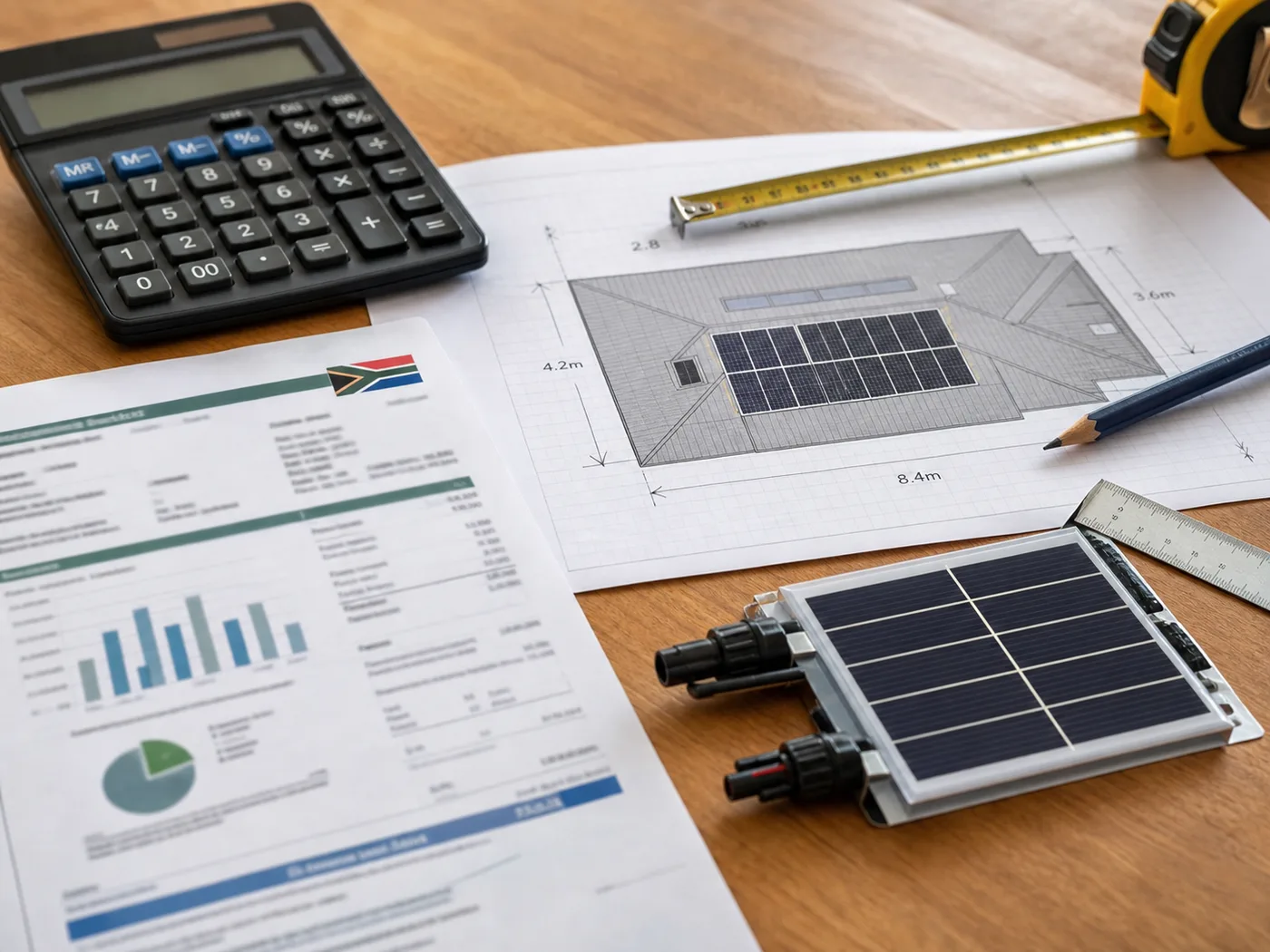
The same system can look very different as an outright purchase, rent-to-own plan or subscription. Compare the published package structures before you request a tailored quote.
The practical difference between rent-to-own and a solar subscription is ownership. Rent-to-own is meant to end with you owning the system. A subscription charges for the use and service of provider-owned equipment.
That does not make rent-to-own automatically cheaper or a subscription automatically more flexible. Annual increases, maintenance cover, early-exit charges, buyout rules and how long you stay in the home decide the real result.
Quick decision
Choose rent-to-own if ownership is important, you expect to stay, and the full payment schedule is affordable.
Choose subscription if low upfront cost and provider-managed equipment matter more than ownership, after checking cancellation and removal fees.
Consider buying if you can fund it without expensive debt and want the simplest ownership path.
Compare the same equipment and expected output. Headline monthly prices for different systems prove very little.
Rent-to-own vs subscription vs buying
Question
Rent-to-own
Subscription or solar-as-a-service
Buy cash or with a loan
Who owns it during the agreement?
Usually the provider or financier until contractual transfer
Provider
You, subject to any lender security
Do you own it later?
Yes, if the transfer conditions are met
Not automatically; some contracts offer a later purchase
Yes
Upfront cost
Usually low or zero
Usually low or zero
Full price, deposit or loan fees
Monthly cost
Fixed or escalating instalments for a defined term
Recurring service fee, often escalating
Loan repayment if financed
Maintenance during term
Often included, but scope varies
Usually included, but scope varies
Your responsibility unless covered by installer warranty/service plan
Early exit
Settlement or contract remedy may apply
Notice, deinstallation and other fees may apply
Sell or move your asset, while settling any loan
Best suited to
Settled owner who wants eventual ownership
Buyer prioritising service and lower commitment
Buyer prioritising control and lifetime ownership
In South African marketing, the word "lease" can describe either of the first two columns. The contract must state who owns the equipment, whether payments reduce a purchase balance and what happens at the end.
How the money differs
Rent-to-own has an end date, but check the escalation
A defined term makes it possible to calculate the scheduled total. That calculation needs every year's payment, not just the advertised starting amount.
For example, R1,500 a month over seven years is R126,000 if it never changes. With a 6.5% annual increase, the same starting payment totals about R153,412. By year seven, the monthly amount is about R2,189. This is an illustration, not a quote. It shows why "from R1,500" cannot answer what the plan costs.
Alumo currently advertises 3, 5 and 7-year rent-to-own terms from R1,418 a month on its plans portal. Ask for the payment in every year, the early-settlement amount and the exact event that transfers ownership.
A subscription may be open-ended
A subscription fee can continue for as long as you keep the service. GoSolr's published agreement, for example, runs until cancelled and applies CPI escalation each July. It permits a purchase request after three years, but that purchase is not automatic or the same as rent-to-own.
To compare an open-ended plan with rent-to-own, choose a realistic holding period such as five, seven or ten years. Add all monthly payments, increases, initiation fees and an exit or purchase amount. Then show the asset value at the end as a separate line rather than pretending it is guaranteed cash in your pocket. Our subscription, rent-to-own and buy calculator adds this up for any holding period.
Buying has the clearest ownership, not necessarily the easiest cash flow
Cash avoids subscription escalation and finance interest, but ties up capital and leaves service risk with you after warranty cover. A loan spreads the purchase price, although interest and a long term can materially increase the total paid.
It can, but the saving should be demonstrated rather than assumed. A household saves when avoided grid purchases and avoided outage costs exceed the subscription's fees and remaining grid bill. Solar does not normally erase the whole electricity account because fixed charges, night use, weather and loads larger than the system still matter.
Ask the provider for:
12 months of your electricity use used in the model;
forecast annual solar generation in kWh;
expected self-consumption rather than total generation alone;
the tariff and annual tariff increase assumed;
battery operating settings and usable capacity;
expected grid bill after installation; and
the effect of subscription escalation.
Run a low, central and high electricity-price case. Treat a sales forecast as an estimate, not a guaranteed return, unless the contract provides a specific remedy. For the underlying calculation, see solar payback periods in South Africa.
Free planning tool
Solar finance and payback calculator
Compare cash payback with a financed system, using your own bill, tariff and assumptions.
R 2 500
R 110 000
70%
Payment route
Cash payback
5.2 years
20-year net saving
R 851 001
Year-one saving
R 1 750/mo
Estimated array
4.4 kW
About 8 × 550 W panels
Roughly 23.3 m² of usable roof
Indicative scenario only. It excludes finance fees, tax effects, maintenance, export credits and site-specific generation. The assumptions are visible below so the result can be challenged instead of treated as a quote.
A subscription can be the stronger choice when it moves meaningful technical and financial risk to a provider. That may include monitoring, covered repairs, battery failure, inverter replacement, insurance and scheduled maintenance.
The value is in the contract, not the word "subscription". Check service response times, exclusions, insurance excess, whether labour and travel are covered, and how battery degradation is handled. A low monthly fee with a narrow service promise is a different product from a fully managed system.
Subscriptions can also offer a shorter practical commitment than a long finance term. Stage Zero advertises month-to-month service with three months' notice. Alumo says its subscription can be cancelled after 24 months. Both still require you to understand fees and removal obligations.
Where rent-to-own can be better
Rent-to-own gives a settled homeowner a defined route to ownership without the initial cash purchase. Once title has transferred, there is no subscription fee, although you then carry maintenance, insurance and replacement costs.
Ownership can also give you more control over expansion, settings, installer choice and what happens during a property sale. Those rights may be restricted while the finance agreement is active, so check before adding panels or changing equipment.
Do not count a resale premium as guaranteed. Owned, compliant solar may be attractive to buyers, but property value depends on system age, paperwork, remaining warranties, installation quality and the local market. Our solar and home resale guide covers the evidence and caveats.
Moving house exposes the biggest differences
With rent-to-own, you may need to settle the agreement, transfer it with approval, or move equipment that you do not yet own. With a subscription, the provider may allow a buyer takeover, a paid relocation, purchase or cancellation.
GoSolr's public contract describes takeover, purchase and cancellation options after a sale. Stage Zero says relocation is offered for a fee. Those are provider-specific examples, not general rights.
Before signing, ask the provider to price a hypothetical move in year two and year five. Put the answer in writing. Read what happens to solar when you move before relying on portability.
Insurance, warranties and repairs
During a subscription, the provider generally insures and maintains its asset, subject to exclusions. During rent-to-own, cover may be included for the term and then change when ownership transfers. With a purchase, you rely on product and workmanship warranties plus your own insurance.
Record the warranty holder, claim process and remaining cover at transfer. A 10-year product warranty does not mean every call-out, labour charge or performance loss is covered. Use our solar warranties comparison and solar insurance checklist to review the detail.
Tax treatment depends on the taxpayer and contract
Do not choose a residential payment model on the assumption that Section 12B creates an automatic deduction. The allowance concerns qualifying business assets and tax use, and entitlement can depend on ownership, trade and when an asset is brought into use. A service customer may not own the asset being claimed.
Businesses should have an accountant or tax adviser review the exact agreement. Our Section 12B solar guide explains the general framework and source material, but it is not personalised tax advice.
Not sure which system you need?
Get a free, no-obligation quote sized to your home, usage and budget. It only takes a minute.
Standardise the system. Use the same inverter power, usable battery energy, panel array and output assumptions.
Build a payment timeline. Include deposits, initiation fees, annual escalation, loan interest and end-of-term amounts.
Model your exit. Price cancellation, deinstallation, settlement, relocation and a property sale in more than one year.
Value service separately. List monitoring, maintenance, insurance, call-outs and replacement obligations.
Record the end state. State who owns each component, which warranties remain and what the expected system age will be.
Do this over the number of years you realistically expect to stay, then repeat for an earlier move. That produces a much more reliable answer than comparing the first monthly payments.
Frequently asked questions
Is solar subscription better than buying?
It can be better for cash flow and managed service because the provider owns and maintains the equipment. Buying is usually better for control and certain ownership. The lower total-cost option depends on finance cost, escalation, service value, equipment life and how long you keep the system.
Is rent-to-own the same as a solar subscription?
No. Rent-to-own is intended to transfer ownership after a defined term and contractual conditions. A subscription provides the use of provider-owned equipment and does not automatically make you the owner.
Is a solar subscription the same as a lease?
The terms are sometimes used interchangeably in marketing. A lease can be a pure rental, a finance lease or part of a service agreement. Read the ownership, purchase option, cancellation and residual-value clauses to know what it really is.
Which is better if I may move?
The agreement with the lowest written cost for sale, cancellation or relocation is better, regardless of its label. A subscription can be flexible but may charge for notice and removal. Rent-to-own may require settlement or an approved transfer.
What happens after rent-to-own ends?
Ownership should transfer according to the contract once all required payments and conditions are met. Confirm whether a final payment, transfer fee or paperwork step is required, and which warranties continue afterwards.
How does SolarGuide make money?
SolarGuide currently earns referral fees from eligible Alumo quote requests. Alumo offers both subscription and rent-to-own, so this article compares the structures rather than declaring one a universal winner. Provider information was checked on 20 September 2026 and can change. Request an Alumo quote.
SolarGuide is an independent referral partner. We help you compare options and arrange a free quote — Alumo supplies, installs, finances and warrants the systems. Pricing is indicative, sourced from Alumo’s published catalogue, and subject to a site assessment and credit approval.